Health and Safety Policy — Commercial Waste Removal Brimsdown
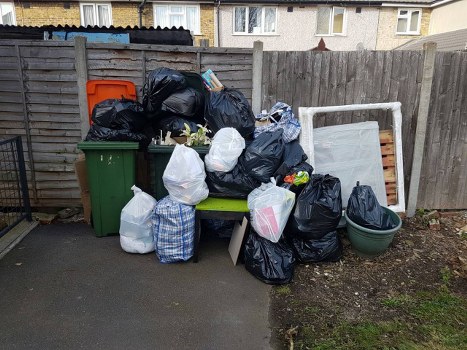 This Health and Safety Policy sets out the commitment of our commercial waste removal operation in Brimsdown to protect employees, contractors, clients and the public. It applies across our rubbish collection and waste disposal activities within the company's service area and outlines responsibilities, safe systems of work and the controls we use to reduce the risk of harm. The aim is to ensure that every element of our commercial waste business operates to recognised safety standards while maintaining efficient rubbish removal and waste management across the service area.
We recognise that effective safety management is integral to delivering reliable waste removal services. Policy objectives include preventing work-related injury and ill health, maintaining safe vehicles and equipment, ensuring correct segregation and handling of hazardous and non-hazardous materials, and providing adequate training. The scope covers site collections, transfer loading, route planning, depot maintenance and interactions with third-party sites used during commercial waste collection and clearance.
 All staff and subcontractors engaged in our rubbish company service area operations must follow documented safe working procedures and complete required competence checks before undertaking duties. Line managers are responsible for risk assessments, implementation of control measures and routine supervision. Employees are required to report hazards, co-operate with safety instructions and use issued personal protective equipment (PPE) whenever tasks present exposure to risk. Compliance is monitored through inspections, audits and incident reviews.
Responsibilities and Organisation
Senior management retains overall accountability for safety and will ensure adequate resources are available to support the policy. Specifically, managers will: carry out and record risk assessments; ensure vehicle and plant maintenance schedules are met; verify driver fitness and licences; and ensure training in waste handling, manual handling, and spill control is provided. Frontline supervisors will enforce site rules and safe practises during commercial rubbish collection tasks in the service region.Key duties for employees
Employees must:- adhere to safe loading and lifting techniques;
- use PPE such as gloves, hi-vis, and protective boots;
- follow segregation protocols for recyclables, general waste and hazardous items;
- refuse to undertake unsafe acts and report defects in equipment or unsafe conditions.
We maintain records for training, toolbox talks and competence assessments. Regular briefings and refresher sessions focus on topics such as manual handling, driving safety, working near traffic, and controlling dust and biohazards. Monitoring includes scheduled audits and random spot checks to ensure everyone in the waste removal service team follows policy and statutory requirements.
Risk assessments are central to safe operations. For each routine activity — collection, transfer station handling, vehicle loading/unloading and site clearance — formal assessments identify hazards and document mitigation measures such as mechanical handling aids, two-person lifts, exclusion zones, and traffic control. Our approach to hazardous waste follows a higher level of control, with clear labelling, separate containment and disposal via authorised routes to reduce exposure and contamination risks within the local rubbish collection network.
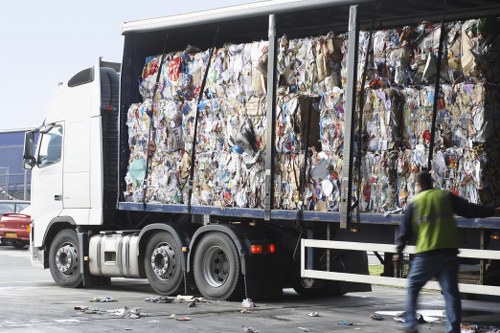 Vehicle and plant safety is a priority: pre-shift vehicle inspections, regular maintenance, secure load restraint and safe reversing procedures ensure the safety of drivers, crew and the public. All drivers receive training on route planning to minimise unnecessary manoeuvres, reduce idle times and lower the risk of road-related incidents while operating in the commercial waste collection area. Vehicle incident reporting and investigation procedures aim to capture lessons learned and prevent recurrence.
 Personal Protective Equipment is supplied based on assessed need and includes gloves, hi-visibility clothing, safety boots, eye protection and respiratory protection where dust or bioaerosols are present. PPE is seen as one layer of protection and must be used in combination with administrative and engineering controls. A stock control procedure ensures replacement PPE is available, clean and fit for purpose for every rubbish removal shift.
 Emergency preparedness and incident response arrangements are maintained to manage spills, injuries, fires and other unplanned events. Clear escalation routes, first aid provision, spill kits and emergency contact processes are in place at depots and across collection sites. Incidents are recorded, investigated and reviewed to inform micro-level changes in procedures or additional training where necessary as part of continuous improvement in our waste removal services.
Contractor and client interface rules ensure that third parties working within our commercial waste streams comply with safety standards. Contractors must demonstrate competence, carry suitable insurance and follow the same segregation and handling requirements. Where clients provide on-site access, pre-work surveys and site-specific risk briefings are undertaken to align expectations and maintain safe operations within our rubbish service coverage.
Policy review and continuous improvement: this document is reviewed at least annually or sooner following a significant incident, regulatory change or operational change. Performance metrics such as incident rates, near misses, audit outcomes and training completion are used to track effectiveness. Where improvements are identified, corrective actions are assigned, implemented and tracked to closure to strengthen safety across our commercial waste removal and rubbish collection activities in the service area.